Juan Meza Historical INTERVIEW: PDF
(release pending July 14, 2026)
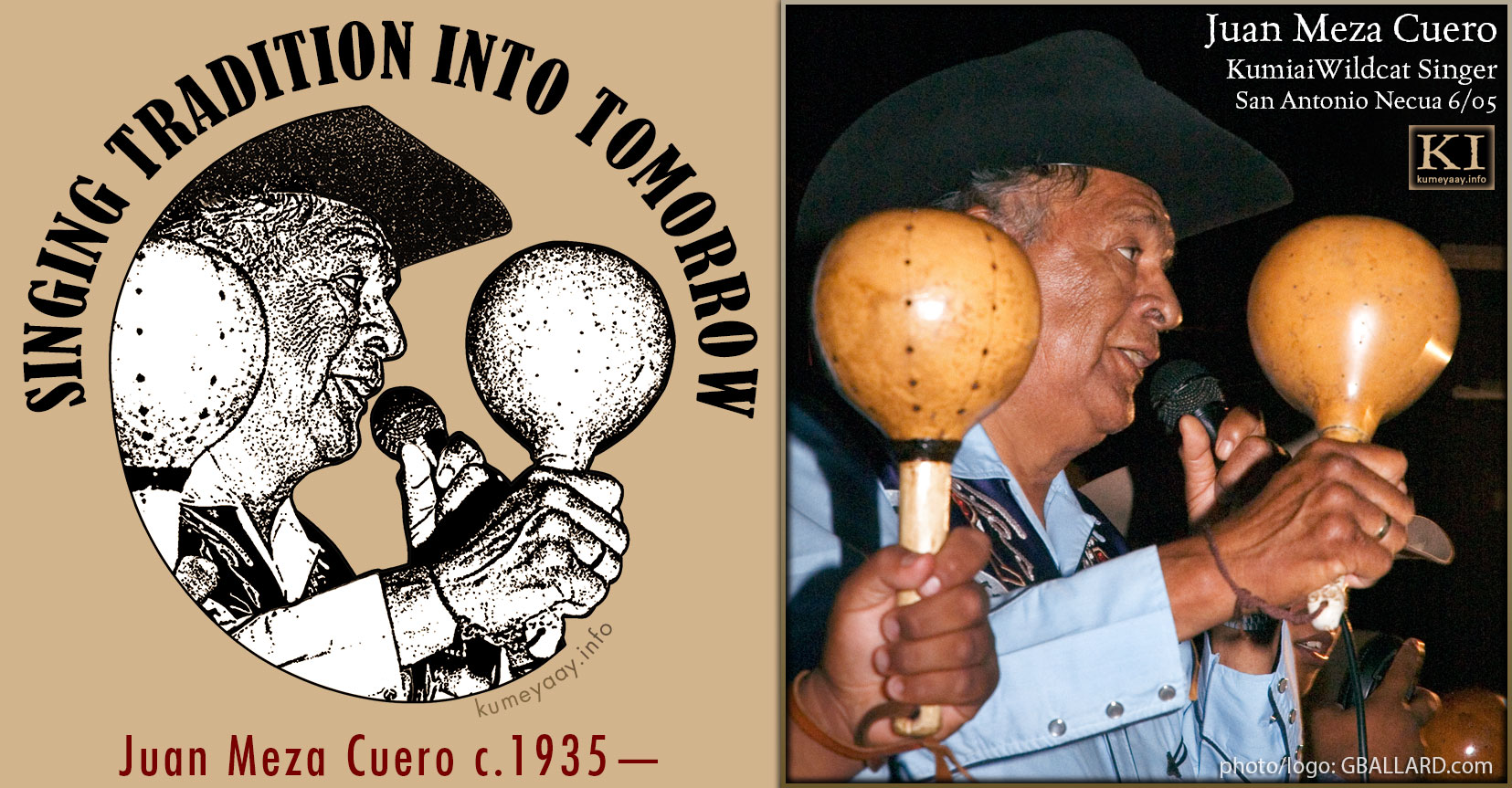
I had a time getting biographical facts on Mr. Meza -- until I stumbled upon this uabc.mx interview. It put his birth year "1935" in his own words -- but Jon didn't look that old to me.
I am still trying to confirm if Juan Meza Cuero, Kumiai-PaiPai, is still alive or the year he died....
- AUTONOMOUS UNIVERSITY OF BAJA CALIFORNIA
- INSTITUTE OF HISTORICAL RESEARCH
- ARCHIVE OF THE SPOKEN WORD
- ORAL HISTORY PROJECT
- HISTORY OF TECATE
- INTERVIEW WITH
- JUAN MEZA CUERO
- PHO-8-67
- TECATE, BAJA CALIFORNIA
SOURCE: https://repositorioinstitucional.uabc.mx/
TRANSLATION Español to English by https://chatgpt.com
TRANSCRIBED EXCERPTS
IN HIS OWN WORDS:
 My name is Juan Meza Cuero. I was born on May 26, 1935, in Potrero, California. My parents were Alfonso Meza Cuajo and Rosario Cuero Paipa. My parents brought me to Tecate. My father came to Tecate because of the war that existed back then, because they were killing all the Indians and the U.S. government was persecuting the Native people. They killed everyone who had Native surnames. We came in the 1940s. I was 12 years old.
My father took me to Plateros because my mother died. My father and my grandmother took care of me. My grandmother was Felicitas de Cuero. Back then people did not know who the Kumiai were; they did not know what kind of Native people we were. Here in the north there were Cochimí people and some Paipai who came from Santa Catalina. The Kiliwa were farther south of Ensenada.
In the La Huerta area there were Cochimí, Kumiai, and some Paipai. I don't know whether my grandmother was Cochimí or Kumiai. It was the Santa Catalina area....
I experienced traditional Native customs. I remember that when someone died, there were celebrations. A year later they would hold them. When a person died, they prayed and everything, and they held a celebration called "the mourning." The food included beans, meat, potatoes, wheat dishes, and pozole made with wheat or corn. I remember when corn was planted. There were no stores; everything was grown. Since there were no stores, people ate acorns, agave stalks, and gathered honey....
There were no schools. I only learned to speak and write by myself, thank God. I also learned English on my own and to translate Kumiai into English, also by myself. With my relatives I spoke Kumiai and Spanish. I only learned to speak English recently because I never liked Americans, and since I was a teacher of the Indigenous language, I had to translate in three languages: Spanish, Kumiai, and English. In the United States they made me a teacher; I am not really a teacher. They invited me to translate the language into English.....
My style of singing is called Wildcat; in the Indigenous language it is called *nemi*. Even though we are Kumiai, we play differently. That is why they call me. This song can be played anywhere. Speaking of *Kuri Kuri*, it means, in my language, that there was an Indigenous man who sang a song that lasted a long time, and the dancers would say *Kuri Kuri*, which means, "Another, another!" Not the same one—change it, *kuakur kuakur*, as the words change. Depending on where they go, they call the celebration something different. Everyone has a nickname.
I have many songs, 120-something songs. What happened with Andrés, who was going to publish them? I don't know. Michael wants to talk with him. What happened to the 127 different songs? They are different songs. This is a story from here, from the countryside to Ensenada, traveling around with those songs. They are stories like the one about Tecate, the Cuchumá Mountain. I think the Indigenous people gave it that name, which means "The Sleeping Man."
In other words, there was an enchanted mine on that mountain, and there was a man guarding it. People would pass by and say *Cuch-uchma*, referring to the man who was asleep guarding the mine. And Tecate, you know, means *it tacat*, and the brewery liked the name, which is why it is called Tecate, but it actually means "to cut firewood." People from the United States came to cut firewood, and they bought tequila....

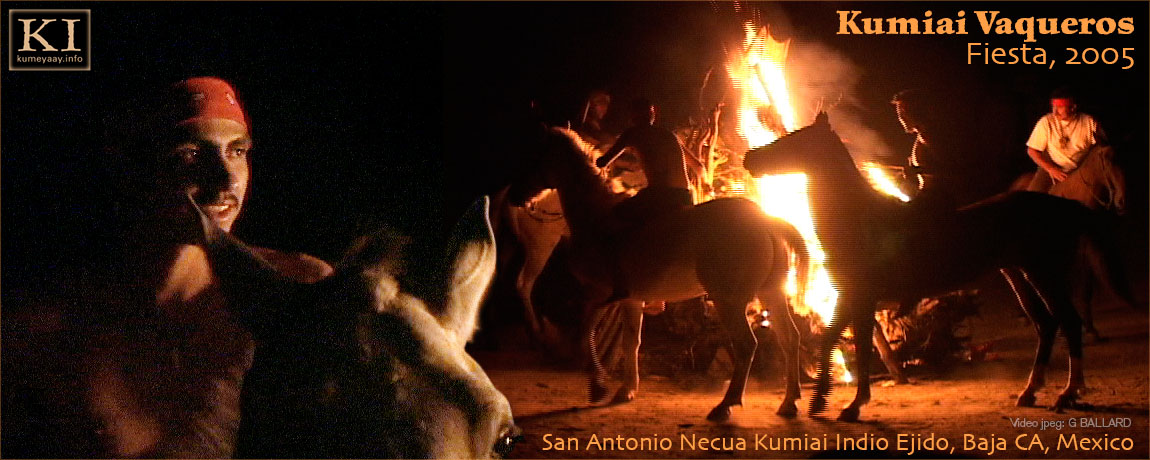
I featured Juan Meza's 2005 live concert event video in my 75-minute movie documentary DVD -- including the Grand Opening scene below -- Native American Indians riding horses around a community bonfire during the grand opening of a tribal cultural show where John was a featured singer: